


High-performance glass fibers are designed in a synergistic manner with glass components and processes, ultimately exhibiting significant advantages over traditional E-glass fibers in key indicators such as mechanical strength, elastic modulus, temperature resistance, chemical corrosion resistance, and dielectric properties. With the increasing demands for material performance in high-end applications such as wind power, aerospace, and electronic communications, high-performance glass fibers have become an indispensable key basic material in strategic emerging industries.
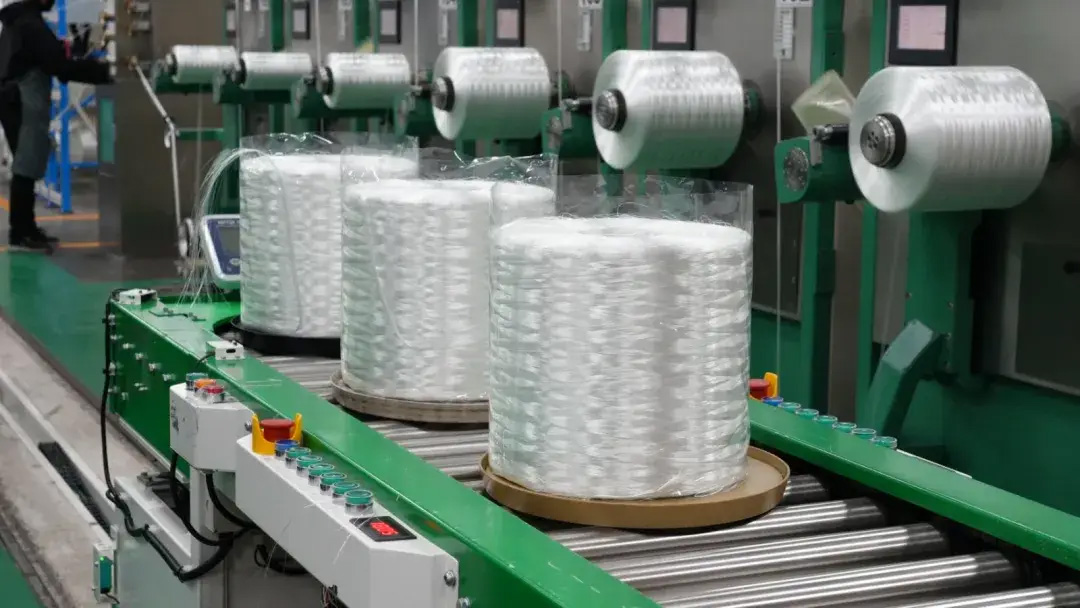
S-glass is renowned for its superior strength, modulus, and impact resistance.Overview of main types of high-performance glass fiber
| Name | Key Features | Main Advantages | Typical Application Fields |
| High-strength glass fiber (S-glass) | Extremely high tensile strength and temperature resistance | High specific strength, excellent fatigue resistance | Aerospace structural components, defense equipment, high-performance sports equipment |
| High-strength high-modulus glass fiber (R-glass) | High strength, high modulus, excellent fatigue resistance | Outstanding rigidity, small deformation, balanced overall performance | Aerospace structural components, high-end industrial components, sports equipment |
| High-modulus glass fiber (HME-glass) | Extremely high elastic modulus | Excellent stiffness, suitable for structures requiring high rigidity | Wind turbine blades, high-pressure pipelines, aerospace structural components |
| Low-dielectric glass fiber (D-glass) | Extremely low dielectric constant and dielectric loss | Low high-frequency signal transmission loss, fast transmission speed | 5G/6G circuit boards, radomes, chip packaging, wave-transmitting structures |
| Boron-free, fluorine-free, and alkali-free glass fiber (Advantex®) | Excellent acid resistance, environmentally friendly composition | Performance close to E-glass, free of boron and fluorine pollution | Environmental protection facilities, chemical anti-corrosion, transportation, electrical insulation |
| Alkali-resistant glass fiber (AR-glass) | Resistant to corrosion in alkaline cement environments | Specifically used for cement-based composite materials, good durability | GRC products, building facades, prefabricated components, flooring systems |
Its tensile strength is 30%–40% higher than that of E-glass, its elastic modulus is 16%–20% higher, and its heat resistance is improved by 100–150°C. These characteristics make it a preferred material for high-performance sectors such as aerospace and defense equipment. In recent years, the introduction of carbon nanotubes as a secondary reinforcement has further enhanced the interlaminar toughness and delamination resistance of S-glass/epoxy laminates, offering new material options for applications in the aerospace and automotive industries.
2. High-strength, high-modulus glass fiber
R-glass achieves an excellent balance of strength, modulus, and heat resistance, making it a preferred reinforcing fiber for many high-performance composite products. Like S-glass, R-glass exhibits outstanding fatigue resistance; composites reinforced with R-glass demonstrate fatigue performance nearly ten times superior to those reinforced with E-glass. This combination of properties makes R-glass particularly suitable for structural applications requiring lightweight characteristics, high rigidity, and durability, such as aerospace structural components, high-end industrial parts, and sports equipment.
3. High-modulus glass fiber
HME-glass achieves a significant increase in elastic modulus through compositional innovation and process optimization. For instance, early M2 high-modulus glass fiber (based on the SiO2-Al2O3-MgO system, with additions such as CeO2, La2O3, and ZrO2 to boost the modulus) reached an elastic modulus of 93 GPa—approximately 30% higher than that of E-glass. Such fibers are critical materials for applications including large-scale wind turbine blades and corrosion-resistant pressure vessels. Amid the trend toward larger wind turbine blades, HME-glass has become a key material for manufacturing the main spars of blades exceeding 100 meters in length. “Ultra-high modulus wind power yarn” developed by domestic enterprises has entered mass application; after undergoing over 1.5 million fatigue test cycles, it continues to meet the rigorous material reliability requirements for wind turbine blades. Market research indicates that the global market for high-modulus glass fiber used in fiber-reinforced thermoplastics (FRTP) is projected to grow at a compound annual growth rate (CAGR) of 5.3%, reaching a market size of US$1.231 billion by 2031, reflecting strong demand in sectors such as wind power and automotive lightweighting.
4. Low-dielectric glass fiber
D-glass features an extremely low dielectric constant and low dielectric loss, making it an ideal material for high-frequency electronic applications. Market demand is steadily rising alongside the development of 5G/6G, AI computing, and satellite communication technologies. Leading domestic enterprises are actively advancing the localization and technological iteration of these products. For instance, ultra-low dielectric (LDK 2nd generation) electronic-grade glass fiber yarns and fabrics meet the requirements for high-end, high-speed, and high-frequency copper-clad laminates used in 6G communications, AI servers, and low-Earth orbit (LEO) satellites. Regarding policy support, six government departments—including the Ministry of Industry and Information Technology—explicitly proposed in the “Work Plan for Stable Growth in the Building Materials Industry (2025–2026)” that the application of low-dielectric glass fiber products be promoted in sectors such as next-generation displays and integrated circuits. This provides clear policy guidance for the industry’s development and expands its market potential.
5. Boron-free, fluorine-free, and alkali-free glass fiber
While retaining the fundamental properties of E-glass, Advantex® significantly enhances corrosion resistance and environmental benefits by eliminating harmful components such as boron and fluorine. This makes it suitable for harsh industrial environments and sustainability-focused applications, including environmental protection facilities (such as flue gas desulfurization systems), anti-corrosive piping for the chemical industry, and the transportation sector.
6. Alkali-resistant glass fiber
Through specialized compositional design, AR-glass effectively withstands the highly alkaline environment of cement. It serves as a key reinforcing material enabling lightweight, high-strength, and complex-shaped cement-based materials, such as glass fiber-reinforced concrete. These fibers are specifically designed for the manufacture of lightweight wall panels, exterior cladding, and prefabricated components; they effectively withstand the highly alkaline environment created by cement hydration products and maintain long-term durability, thereby advancing modern construction technology.
Through targeted compositional design and process optimization, high-performance glass fibers meet the rigorous material performance requirements of specialized, high-end applications.As technology advances and application areas expand, high-performance glass fibers will play an increasingly vital role in driving industrial upgrading and sustainable development. Future trends include: the scaling up of wind turbine blades driving demand for high-modulus glass fibers; 5G/6G communication technologies spurring innovation in low-dielectric glass fibers; environmental policies fostering the development of eco-friendly (e.g., boron-free and fluorine-free) glass fibers; and smart manufacturing facilitating the optimization of production processes. As a key component of the new materials sector, high-performance glass fibers are steering the composites industry toward superior performance and greater environmental sustainability, providing essential material support for advancements in modern industrial technology.
Post time: Jul-02-2026


