

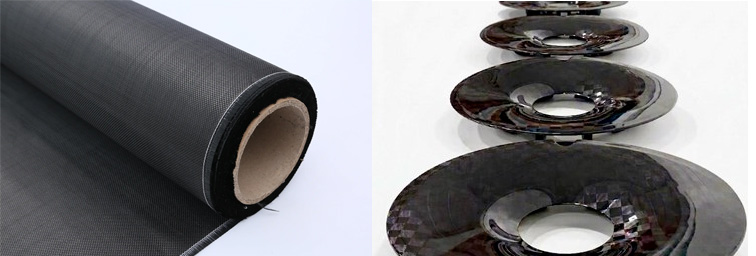
Recently, Carbon ThreeSixty, a leading British manufacturer of advanced composite materials, announced that its thermoplastic composite aerodynamic wheel arches—developed using Tailored Fiber Placement (TFP) technology—have completed all technical validation and are now ready for mass production. These wheel arches are compatible with a wide range of road vehicles, including passenger cars and light commercial vehicles, offering a new solution for the automotive industry’s transition toward lighter and more sustainable vehicles.
It is reported that traditional aerodynamic wheel arches for road vehicles primarily rely on prepreg manufacturing processes, which suffer from challenges such as complex layups, difficulty in local reinforcement, heavy components, and high production costs.
Carbon ThreeSixty has overcome these technical bottlenecks by innovatively introducing TFP (Tailored Fiber Placement) technology. Using automated equipment, carbon fibers are precisely laid out according to the stress directions of the vehicle’s wheel arch, replicating biomimetic structures to form an integrated reinforcement structure on the wheel arch surface featuring radial “spokes” and annular “ribs.”
This thermoplastic composite wheel arch represents a major breakthrough in performance. Compared to traditional prepreg solutions, it achieves over 20% weight reduction and a 30% increase in stiffness, while effectively reducing material waste and layering processes, significantly lowering manufacturing costs. Utilizing a thermoplastic resin matrix combined with resin infusion technology, it enables the one-piece molding of complex curved surfaces, making it perfectly compatible with automotive automated mass production lines and offering both practicality and cost-effectiveness.
In terms of application value, this wheel arch effectively optimizes vehicle aerodynamics; its smooth surface reduces turbulence around the wheel area, helping to increase the range of new energy vehicles by 5%–8%. Additionally, carbon fiber thermoplastic composites have a density of only one-quarter that of metal, enabling a weight reduction of 1.5–2 kg per wheel arch, which significantly optimizes unsprung mass and improves vehicle handling and braking response.
Furthermore, the product is compatible with thermoplastic composite recycling processes, aligning with the automotive industry’s trend toward low-carbon and eco-friendly development, and holds broad market application prospects.
Carbon ThreeSixty has been deeply engaged in the advanced composites sector for many years, specializing in the R&D of carbon fiber wheels, aerodynamic components, and other products. The company masters core processes such as RTM, compression molding, fiber winding, and TFP custom fiber placement, serving multiple high-end sectors including automotive, aerospace, and defense. The launch of this new aerodynamic wheel cover further demonstrates the company’s technical prowess in the application of thermoplastic composites and injects new momentum into the lightweighting of road vehicles.
Post time: May-12-2026


