


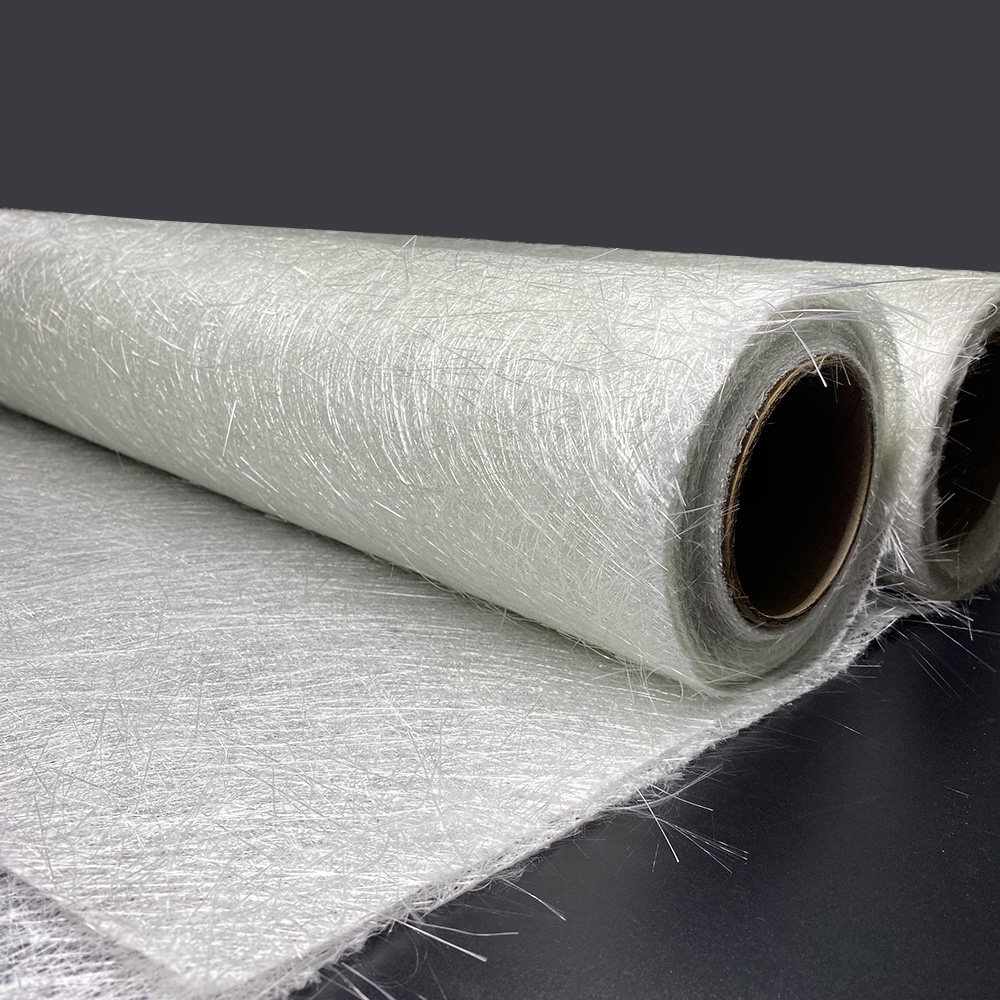
In the landscape of modern high-performance materials, fiberglass mats stand out for their exceptional physical and chemical stability. From advanced energy storage and vacuum insulation to precision filtration, the material’s evolution is actively redefining industrial capabilities.
Below, we break down the current market applications, technical challenges, and upcoming development trends for fiberglass mats across four core sectors.
1. AGM Separators: The Core Lifeline of Lead-Acid Batteries
As a critical component in lead-acid batteries, the Absorptive Glass Mat (AGM) separator directly dictates battery life and discharge efficiency. Thanks to its high liquid absorption, superior porosity, low electrical resistance, and outstanding acid resistance, it remains the industry-standard medium for holding electrolyte solutions.
The Balancing Act of Fiber Blending
Most commercial AGM separators are manufactured via a wet-laid process utilizing flame-blown glass microfiber. However, optimizing performance requires navigating a strict trade-off in fiber diameter:
Fine Glass Microfibers:Offer a massive specific surface area, resulting in smaller pore sizes and a highly dense structure. The downside? Increased resistance and poor elasticity.
Coarse Glass Fibers:Provide excellent resilience and lower resistance, but introduce larger pores, weaker puncture resistance, and lower overall strength.
Achieving the perfect ratio of coarse-to-fine fibers is where manufacturers establish their competitive edge.
Upgrading the Production Line & Eliminating Vulnerabilities
To satisfy growing global demand for rapid delivery and eco-friendly manufacturing, AGM production lines are shifting toward heavy industrial automation. Advanced paper-making setups—including high-consistency hydrapulpers, conical cleaners, white water pressure controllers, stock dilution systems, and multi-layer tunnel ovens—have become standard infrastructure for top-tier factories.
Furthermore, R&D is heavily focused on overcoming traditional AGM weaknesses, such as poor resiliency, low wet strength, and high vulnerability to puncture:
Silica-AGM (SAGM) Separators: By integrating specialized silica powder, these separators boost acid absorption, surface area, and wettability, significantly extending battery cycle life.
Organic Fiber Composite AGM:By blending organic fibers into the matrix, manufacturers can dramatically improve tensile strength without sacrificing the separator’s excellent compression rates or porosity.
2. Wet-Laid VIP Core Materials: Next-Gen Super Insulation
Vacuum Insulation Panels (VIPs) represent a massive leap forward in thermal management. With an incredibly low thermal conductivity of 1.5 mW/(m·K), VIPs deliver the same insulation performance as traditional materials at just 10% to 15% of the thickness. This makes them one of the most space-efficient insulation solutions on the market today.
Fine Fibers Build Stronger Barriers
A VIP is a three-part system consisting of a getter, a barrier film, and a core material. The core typically relies on glass fibers produced via centrifugal or flame-blown methods. In the pursuit of ultra-low thermal conductivity, finer fiber diameters are essential to minimize solid thermal conduction.
Expansion Across Cold Chain, Appliances, and Green Building
The appliance sector is currently the most mature market for VIPs. In refrigeration, replacing traditional foam with VIP cores reduces wall thickness dramatically, expanding internal storage capacity by 20% to 30% while boosting energy efficiency by 10% to 30%.
The next massive growth frontier lies in sustainable construction. Globally, building energy consumption accounts for roughly 33% of total societal energy use. Because traditional exterior wall insulation is bulky and thermally capped, VIPs are rapidly gaining traction as a high-efficiency, space-saving alternative.
3. High-Efficiency Air Filter Paper: Demanding Environmental Protection
In air filtration, where precision is non-negotiable, fiberglass holds a dominant market share due to its massive specific surface area, high-temperature tolerance, and chemical inertness.
Flame-blown glass microfibers feature highly uniform structures, small diameters, and impressive tensile strength. Filter media crafted from these fibers can achieve an absolute filtration efficiency of up to 99.999% (ULPA standards).
Manufacturing Anatomy: Fiberglass air filter paper is produced using wet-laid technology. The media is pleated and reinforced with hot-melt glue lines to form the rigid element, which is then hermetically sealed into an aluminum alloy frame using premium potting compounds.
Extreme Thermal and Chemical Resistance:The raw material relies on borosilicate glass chemistry. This specific formulation guarantees high tensile strength and thermal stability—the media can withstand continuous exposure to 300°C without any degradation in strength. It also offers elite resistance to chemical weathering and electrical insulation.
Future R&D Shift: The market is aggressively pushing toward “high efficiency with low pressure drop, maximized dust holding capacity (DHC), increased mechanical strength, and functionalized multi-purpose media.”
4. Industrial Liquid Filter Paper: Precision Cake Filtration
While fiberglass liquid filter paper evolved from air filtration technologies, its underlying separation mechanics are fundamentally different.
Liquid filtration relies primarily on cake filtration. As fluid passes through the media, contaminants are intercepted at the surface, rapidly forming a permeable “filter cake.” While this cake layer actually increases filtration accuracy over time, it causes a sharp spike in differential pressure, which can prevent the deep layers of the media从 utilizing their full holding potential.
Optimizing Dirt Holding Capacity (DHC) via Gradient Structures
Fiberglass mats offer tight pore sizes and stable physical/chemical profiles, enabling high filtration ratios and exceptional dirt holding capacities. Industry data shows that when the mean flow pore size is held constant, a material’s dirt holding capacity shares a direct linear relationship with its thickness.
Today’s liquid filtration market demands higher efficiency, longer service life, greater DHC, and higher burst strength. By adjusting process formulas, modern manufacturers have pushed filtration ratios past 1000 (equivalent to a 99.9% efficiency rate). Concurrently, by engineering dual-layer or multi-layer gradient pore structures, the overall dirt holding capacity of these systems has successfully been boosted by 2 to 3 times.
Post time: Jun-18-2026


