

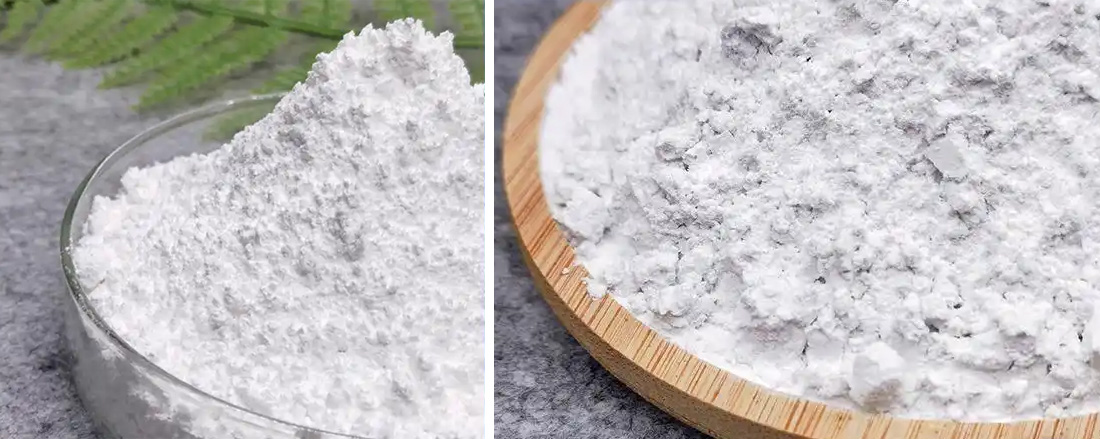
Glass Fiber Powder is not just the filler; it reinforces through physical interlocking at the micro level. After melting and extrusion at high temperature and subsequent grinding at low temperature, alkali-free (E-glass) glass fiber powder still maintains a high aspect ratio and is inert on the surface. It has hard edges, but they are non-reactive and they generate a network of support in resin or cement or mortar matrices. The particle size distribution of 150 mesh to 400 mesh offers a trade-off between easy dispersion and anchoring force, too coarse will result in settling and too fine will weaken the load bearing. Applications that are better suited to high-gloss coatings or precision potting are the ultra-fine grades, such as 1250 glass fibre powder.
The significant enhancement of substrate hardness and wear resistance by glass powder stems from its inherent physicochemical properties and micro-mechanisms within material systems. This reinforcement occurs primarily through two pathways: “physical filling reinforcement” and “interface bonding optimization,” with the following specific principles:
Physical Filling Effect via Intrinsic High Hardness
Glass powder primarily consists of inorganic compounds like silica and borates. After high-temperature melting and cooling, it forms amorphous particles with a Mohs hardness of 6-7, far exceeding that of base materials such as plastics, resins, and conventional coatings (typically 2-4). When uniformly dispersed within the matrix, glass powder embeds countless “micro-hard particles” throughout the material:
These hard points directly bear external pressure and friction, reducing stress and wear on the base material itself, acting as a “wear-resistant skeleton”;
The presence of hard points inhibits plastic deformation on the material surface. When an external object scrapes across the surface, glass powder particles resist scratch formation, thereby enhancing overall hardness and scratch resistance.
Densified Structure Reduces Wear Paths
Glass powder particles feature fine dimensions (typically micrometer to nanometer scale) and excellent dispersibility, uniformly filling microscopic pores in the matrix material to form a dense composite structure:
During melting or curing, glass powder forms a continuous phase with the matrix, eliminating interfacial gaps and reducing localized wear caused by stress concentration. This results in a more uniform and wear-resistant material surface.
Interfacial bonding enhances load transfer efficiency
Glass powder exhibits excellent compatibility with matrix materials like resins and plastics. Some surface-modified glass powders can chemically bond with the matrix, forming robust interfacial connections.
Chemical stability resists environmental corrosion
Glass powder exhibits outstanding chemical inertness, resisting acids, alkalis, oxidation, and aging. It maintains stable performance in complex environments (e.g., outdoor, chemical settings):
Prevents surface structural damage from chemical corrosion, preserving hardness and wear resistance;
Particularly in coatings and inks, glass powder’s UV resistance and resistance to humid-heat aging delay matrix degradation, extending material wear life.
Post time: Jan-12-2026


