

What is quartz glass fiber?
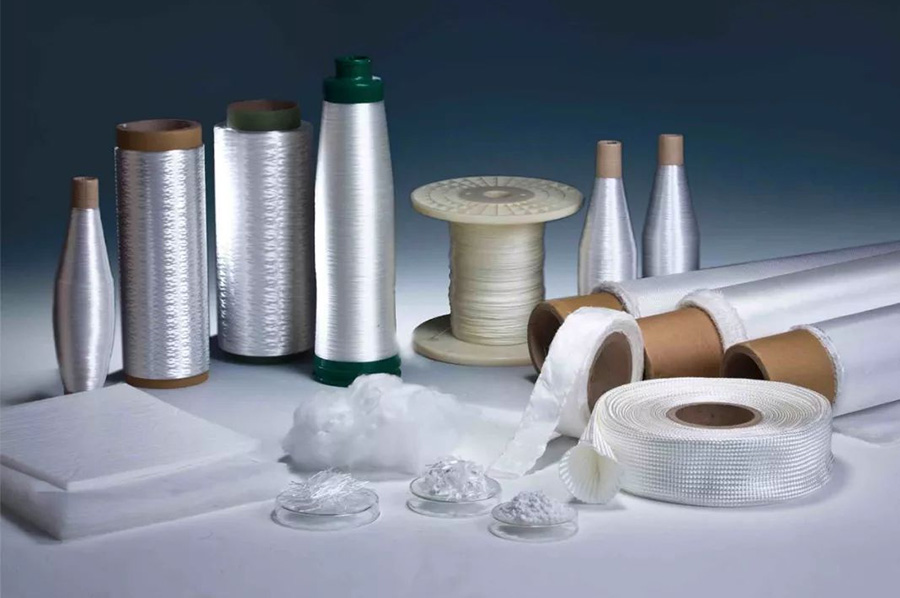
Quartz glass fiber is an inorganic fiber material with silicon dioxide (SiO₂) of ≥99.9% purity as its main component. It is produced through a fused silica rod drawing process. This fiber material combines many of the excellent characteristics and properties of solid quartz, making it an excellent high-temperature resistant material. It can also be composited with ceramics, alumina, nitrides, and other materials in various forms to create composite materials with special properties. Quartz fiber yarn is made by twisting and plying raw filaments.
Why is quartz fiber so strong, and what are its superior properties?
1. quartz glass fiber has excellent high-temperature resistance. Its long-term operating temperature is 1050-1200℃, and its instantaneous temperature resistance reaches up to 1700℃. It maintains high strength under high-temperature conditions, is resistant to thermal shock and ablation, and can be used in aerospace thermal protection, rocket engine nozzles, and high-temperature insulation materials.
2. it possesses excellent dielectric properties and good wave transmission. Its dielectric constant is as low as 3.7, and its dielectric loss coefficient is <0.001>. It has low high-frequency signal transmission loss and high wave transmission (up to 99.3%), which is one of the key performance characteristics that makes it suitable for radar domes, antenna radomes, 5G communication substrates, and missile protection devices.
3. quartz fiber has high mechanical strength. Its tensile strength can reach >1500MPa, density 2.29g/cm³, lightweight yet high-strength structure, reducing equipment weight while maintaining robustness. Furthermore, it can be combined with other materials to create high-performance composite reinforcements, making it a crucial material for satellite structural components.
4. its excellent chemical stability is noteworthy. With a SiO₂ content ≥99.9%, it exhibits strong chemical inertness and corrosion resistance, adapting to harsh chemical environments. This makes it an ideal choice for semiconductor processing equipment, high-temperature filtration materials, and chemical carriers.
Products made from quartz glass fiber are used in many fields.
1. Quartz wool and quartz wool felt are familiar to those conducting high-temperature experiments. These are fluffy short fibers made from blown or drawn quartz fibers, which can be used directly or made into felt. 1. Quartz wool is characterized by its lightweight, porous texture and low thermal conductivity, making it an excellent high-temperature insulation material. It is commonly used in the insulation layers of spacecraft or in industrial high-temperature equipment. The white, fluffy, cotton-like insulation components and quilt-like insulation components on platforms in laboratory tube furnaces and annealing furnaces are quartz wool and quartz wool felt.
2. Cutting continuous quartz fibers to predetermined lengths yields chopped quartz fibers. These can be mixed into high-temperature resistant resins as reinforcing agents and wave-transmitting agents, and molded together to create ablative or heat-insulating materials for manufacturing components such as missile radomes.
3. Quartz fiber yarn is a continuous filament and serves as the base material for subsequent weaving. As one of the most heat-resistant and dielectrically efficient flexible inorganic fibers, it is often used as a reinforcing phase to weave various fabrics or directly for winding and molding composite materials. Furthermore, advanced three-dimensional weaving technology allows the fibers to be interwoven in space. This structure has strong overall integrity, making it an ideal blank for manufacturing complex-shaped, high-load-bearing components such as rocket engine nozzles.
4. Quartz fiber cloth is woven from yarn using plain weave, twill weave, satin weave, and other processes. As a reinforcing material, it is compounded with matrices such as polyimide and epoxy resin to manufacture high-temperature structural components for aircraft, rockets, and missiles, as well as heat-insulating or ablation-resistant materials for satellite antennas and high-frequency printed circuit boards.
Post time: Dec-12-2025


