
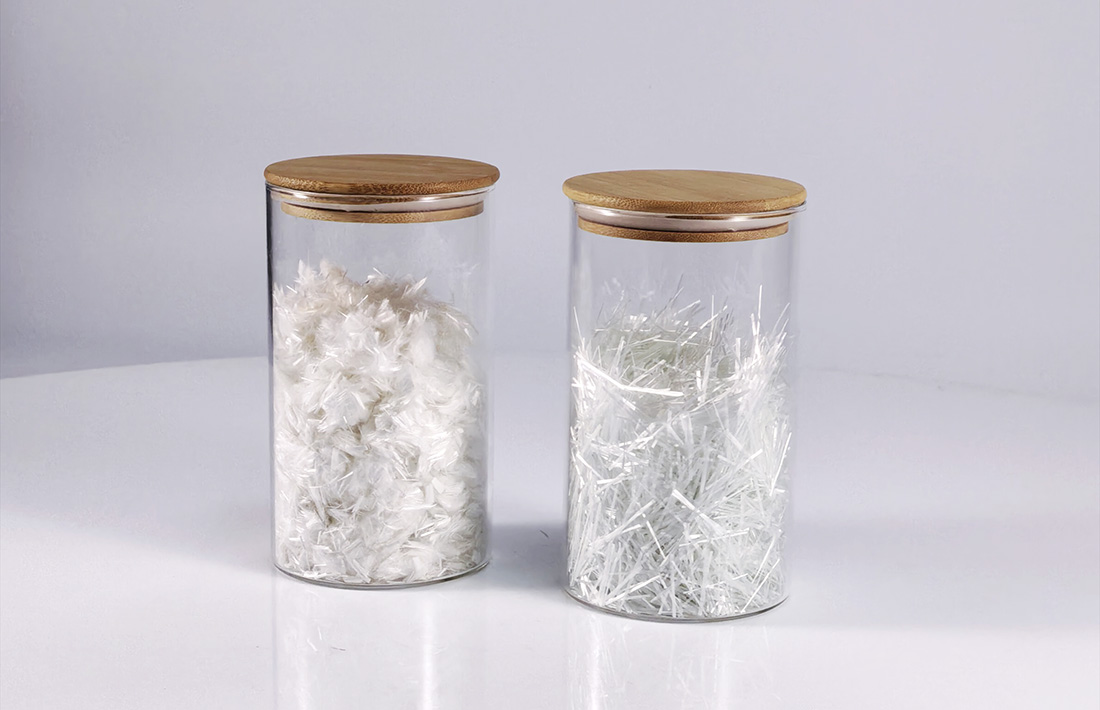
For over a decade, **CHINA BEIHAI FIBERGLASS** has focused on engineering fiberglass solutions that solve real problems for manufacturers across the globe. Right now, our flagship “AR (Alkali-Resistant) Chopped Strands” are flying off the shelves in Southeast Asia— a region where construction booms, high humidity, and strict durability requirements make reliable GRC materials non-negotiable. Local manufacturers in Vietnam, Thailand, Indonesia, and Malaysia have made these strands their top choice for precast components, facade systems, and lightweight partition boards, and we’re proud to say our shipments to the region have grown 40% year-over-year for the past two years.
Today, we’re doubling down on that success by showcasing the full scope of this product— refined through years of on-site testing at Southeast Asian factories, direct feedback from local construction firms, and iterative tweaks to our zirconia formulation to stand up to the region’s tropical climate. This isn’t a one-size-fits-all fiberglass solution; it’s a product built for the specific challenges of markets like Jakarta’s monsoon season, Bangkok’s high-rise construction demands, and Ho Chi Minh City’s rapid urban expansion.
Core Advantages of Our AR Chopped Strands
We didn’t just design these strands in a lab— we developed them alongside our Southeast Asian clients, who told us exactly what they needed to overcome their biggest headaches: strands that disperse evenly in humid mixing rooms, bond tightly to concrete without delamination, and hold up to years of exposure to rain and salt air. The result is a general-purpose alkali-resistant chopped strand that outperforms competitors in the conditions that matter most to our partners in the region.
These strands mix smoothly with concrete and other base materials, forming a consistent blend that works seamlessly with shaking casting and other common techniques for horizontal GRC components. Even in workshops where humidity hovers above 80%— a daily reality in much of Southeast Asia— the strands maintain strong cohesion with the base material, eliminating the weak spots that lead to cracked downspouts, warped meter boxes, and failed facade panels. For infrastructure projects like bridges and drainage systems, where long-term strength is critical, we offer a specialized variant with 16.7% zirconia content— a formulation we fine-tuned after three years of testing in Vietnam’s coastal regions, where alkaline corrosion and salt spray are constant threats.
Our clients in Southeast Asia pushed us to create a product coding system that’s simple enough for factory floor teams to use without confusion. Take “ARC15-98-12mm” as an example:
1.) AR = Alkali-Resistant (the non-negotiable feature for GRC work in humid, alkaline environments).
2.) C = Continuous fiber (the structural foundation of the strand).
3.) 15 = Fiber filament diameter (μm) – a size optimized for easy dispersion in the high-viscosity concrete mixes common in the region.
4.) 98 = Single-yarn linear density (tex) – calibrated for balanced strength and processability.
5.) 12 = Usable yarn length (mm) – a popular choice for Southeast Asian manufacturers of standard GRC parts.
Please contact with us if you have same end use, waiting for your inquiry!
Post time: Jan-05-2026


