


What is fiberglass?
Fiberglass is an inorganic non-metallic material with excellent properties. It comes in a wide variety of types and offers advantages such as good insulation, high heat resistance, strong corrosion resistance, and high mechanical strength.
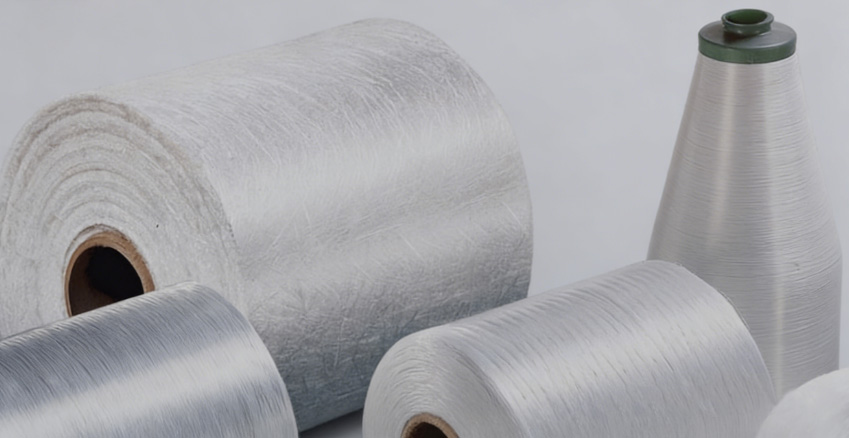
Glass fiber is manufactured from minerals such as micaceous shale, kaolin, limestone, and quartz sand through processes including high-temperature melting, drawing, drying, and winding. The diameter of a single filament ranges from a few micrometers to over twenty micrometers, which is equivalent to 1/20 to 1/5 the thickness of a human hair.
Simply put, glass fiber is “ultra-fine glass filaments” drawn from glass to be many times thinner than a human hair.
Types of Glass Fiber
Based on the alkali content in the glass, glass fiber can be classified into alkali-free glass fiber (E-glass), medium-alkali glass fiber (C-glass), and high-alkali glass fiber. Among these, E-glass is by far the most prevalent, accounting for over 95% of the industry’s total production.
By application, they can be categorized into electronic-grade and industrial-grade glass fibers.
Electronic-grade glass fiber products primarily include electronic yarn and electronic cloth, which are used in printed circuit boards (PCBs), copper-clad laminates (CCLs), and high-frequency, high-speed materials, and are considered high-end glass fibers.
Electronic-grade glass fiber is often classified into first-, second-, and third-generation fabrics.
First-generation fabrics are primarily made of traditional E-glass fiber, offering strong versatility and used in standard PCBs and consumer electronics.
Second-generation fabrics are low-dielectric, low-loss (Low-Dk/Df) glass fiber fabrics, with significantly better dielectric and loss properties than first-generation fabrics, resulting in more stable signal transmission. They are used in mid-to-high-end PCBs, mid-to-high-end servers, 5G/6G base stations, and automotive electronics.
The lower the dielectric constant (Dk), the faster the electrical signal travels; the lower the dielectric loss (Df), the less signal loss occurs, and the lower the heat generation.
The third-generation fabric is an ultra-low Dk/Df quartz glass fiber fabric, also known as Q (Quartz) fabric. It is used in high-frequency and high-speed communications, AI servers, high-frequency RF applications, and high-end packaging substrates, and is currently a core material for high-end electronic substrates.
Industrial-grade fiberglass products include roving, chopped strand, surface felt, woven fabric, unidirectional fabric, and glass wool, which are used in wind turbine blades, building materials, automobiles, and piping.
Based on glass composition, industrial-grade glass fiber is further classified into: E (Electrical) glass, which is the most mainstream; C (Chemical) glass, which offers excellent acid resistance and is used in chemical pipelines, storage tanks, and similar applications; S (High-Strength)/R (Reinforcement) glass, used in aerospace, high-pressure gas cylinders, and high-end wind power applications; and HM (High Modulus) glass, used in large wind turbine blades and similar applications.
Application Areas of Glass Fiber
The primary application areas of glass fiber and their respective market shares are as follows: infrastructure and building materials (25%), transportation (24%), electronics and electrical (18%), energy and environmental protection (14%), consumer goods (8%), and others (11%) (including marine industries, aerospace, and medical applications).
These include relatively cyclical application areas (construction materials, industrial equipment, etc.) as well as emerging application areas (automotive lightweighting, 5G, wind power, photovoltaics), so the fiberglass industry possesses both “cyclical” and “growth” characteristics.
Why the Price Hikes?
Recently, glass fiber prices have continued to rise, with some products even becoming scarce. This is primarily driven by the convergence of three key factors: surging demand, rigid supply constraints, and rising costs—a pattern mirroring the price increases in memory chips.
On the demand side, explosive growth in high-end sectors has become the core driver. AI servers have fueled a surge in demand for high-end electronic fabrics, with the glass fiber usage per PCB in a single AI server exceeding that of a standard server by more than twofold. Simultaneously, the trend toward larger wind turbine blades and the lightweighting of new energy vehicles is accelerating, further amplifying overall industry demand and creating a landscape characterized by “shortages in high-end products and a tight balance in traditional products.”
On the supply side, limited flexibility makes it difficult to keep pace with demand growth. Fiberglass manufacturers have proactively adjusted their product portfolios, shifting traditional capacity toward high-margin specialty fiberglass cloth, which has led to a contraction in the supply of standard electronic cloth. Furthermore, the delivery cycle for core equipment used in high-end electronic cloth production is as long as 18–24 months, making domestic substitution impossible in the short term. Combined with low industry inventory levels, this has created a stark supply-demand imbalance.
On the cost side, rigid cost pressures are forcing companies to raise prices. The price of platinum, a core raw material, has surged dramatically, while auxiliary materials such as illite have risen in tandem, significantly compressing corporate profit margins. Price increases have become an inevitable choice for companies to maintain normal operations. Furthermore, the slowdown in industry capacity expansion is further supporting price increases.
Post time: Apr-08-2026


