


Pre-Construction Preparation
Material Inspection
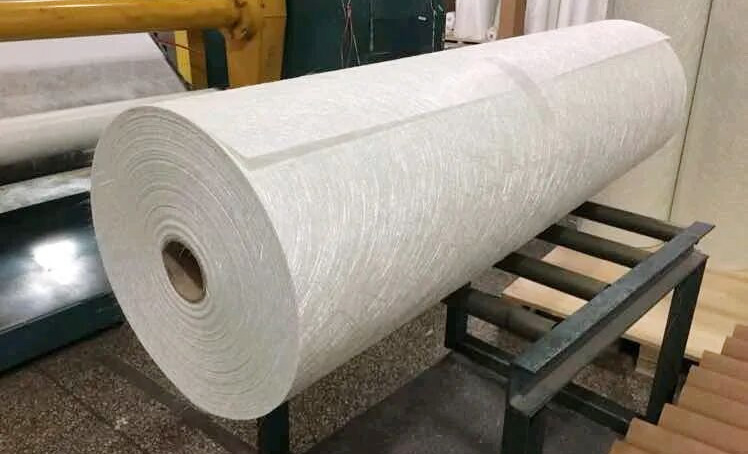
Confirm glass fiber chopped strand mat is free of oil contamination, damage, or delamination; fibers are evenly distributed.
Verify resin type compatibility (commonly unsaturated polyester, epoxy, vinyl ester).
Adhesives are typically powder or emulsion-based; ensure they are not damp or caked.
Tools and Site
Tools: Roller, brush, squeegee, scissors, measuring containers, mixing rod.
Site: Well-ventilated area with temperature controlled between 15–30°C (59–86°F) and humidity ≤75%.
Clean mold surfaces and apply release agent to ensure smooth demolding.
Resin Preparation and Impregnation
Resin Mixing
Add hardener and accelerator according to resin manufacturer’s instructions, mixing thoroughly.
Ensure precise measurements to prevent curing rates that are too fast or too slow, which may affect impregnation effectiveness.
Impregnation Procedure
Pour resin onto the mat surface or mold surface. Spread evenly using a roller or brush.
Work from the center outward to prevent bubble accumulation.
Ultra-thin mats absorb resin quickly; avoid excessive resin application to prevent runoff waste or localized thickness variations.
Layering and Compaction
Layering Method
Apply layers sequentially according to the design. Ensure each mat layer is fully saturated before adding the next.
Ensure edge alignment during layering to prevent thickness variations from uneven overlaps.
De-airing and Compaction
Roll from the center outward using a roller to expel air and excess resin.
Apply steady, moderate pressure to prevent fiber displacement or felt tearing.
Ultra-thin felt conforms well to mold surfaces; increase rolling passes as needed to ensure adhesion.
Curing and Post-Processing
Curing Conditions
Room Temperature Curing: Typically requires several hours to one day, depending on the resin system.
Heat Curing: Follow resin instructions for temperature ramp-up to accelerate curing and enhance performance.
Post-Processing
After curing, demold and inspect the surface for flatness, bubbles, or delamination.
Sand and trim as necessary before painting or bonding other components.
Precautions
Prevent felt drying: Prolonged air exposure degrades resin absorption. Use felt immediately after removal.
Control resin quantity: Ultra-thin felt absorbs minimal resin. Excess resin causes softness and excessive shrinkage.
Avoid forceful stretching: Do not pull felt layers during layup to prevent fiber orientation and maintain isotropy.
Safety precautions: Wear gloves, masks, and goggles to prevent resin and solvent contact with skin and eyes.
Post time: Feb-28-2026


