


1. Basic Structural Characteristics
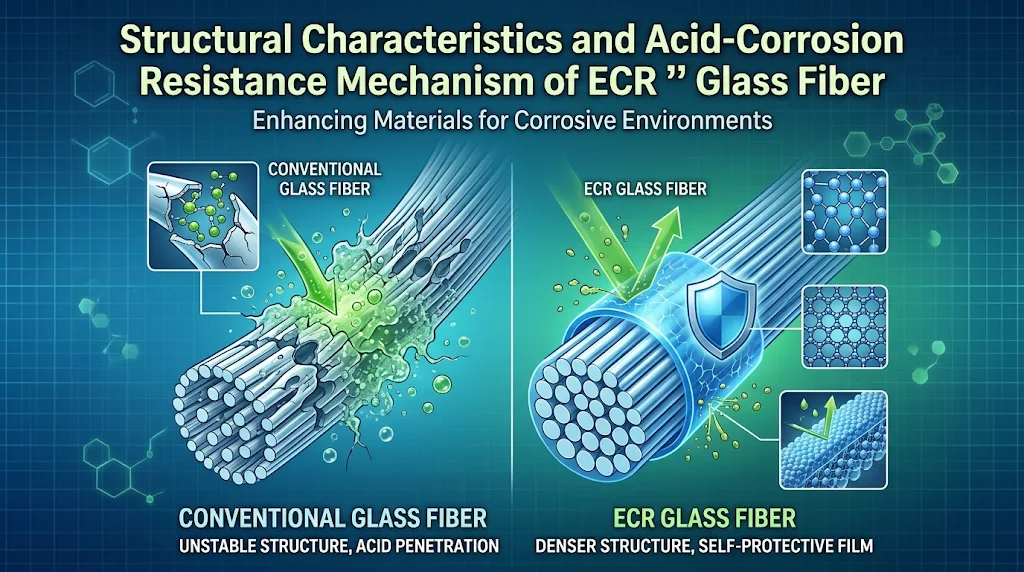
ECR glass fiber is a type of chemically resistant glass fiber specifically developed for environments prone to corrosion. Compared to conventional glass fiber, it features a denser and more uniform overall structure with a more stable internal framework, making it highly resistant to damage from external acidic or alkaline media. Conventional glass fibers contain numerous weak points, allowing corrosive agents to penetrate the material and cause progressive, layer-by-layer structural degradation and aging. Through process improvements, ECR glass fiber possesses a more robust internal framework with fewer voids, which hinders the infiltration of corrosive liquids. Furthermore, the material boasts a higher degree of purity, with an extremely low content of active impurities susceptible to acid corrosion—a key factor underlying its exceptional corrosion resistance. In typical natural settings or mildly corrosive environments, the material exhibits virtually no signs of aging, and it can maintain its structural integrity over long periods even in moderately acidic environments.
2. Basic Mechanism of Acid-Corrosion Resistance
The erosion of glass fiber by acidic media is a gradual chemical degradation process. Upon contact with the fiber surface, the acid begins to erode the outer structure, slowly dissolving unstable components within the material. Conventional glass fibers, which have poor acid resistance, undergo rapid corrosion, leading to a decline in mechanical strength and surface flaking within a short period. The corrosion resistance of ECR glass fiber stems from two primary factors. First, its stable chemical structure makes it resistant to chemical reactions with acidic media; corrosion is confined to the surface and cannot penetrate deeply into the material. Second, when exposed to mild corrosion, the surface of the material spontaneously forms a dense protective film. This film effectively blocks the acid from further attacking the internal matrix, significantly slowing down the rate of aging and corrosion. Thanks to its stable corrosion-resistant properties, ECR glass fiber does not suffer structural damage during long-term immersion; furthermore, its mechanical properties degrade only slowly, allowing it to maintain the structural integrity and operational stability of glass fiber composites over an extended period.
Final Thoughts
As industries continue to demand longer service lifespans and greater reliability under harsh conditions, materials like ECR glass fiber play a pivotal role in reducing maintenance costs and preventing catastrophic structural failures. Understanding its acid-corrosion resistance mechanism is key to selecting the right composite reinforcement for demanding chemical and environmental applications.
Stay ahead with the right material choices—[Explore our ECR product catalog] or subscribe to our newsletter for more technical insights on high-performance materials.
Post time: Nov-10-2026


