


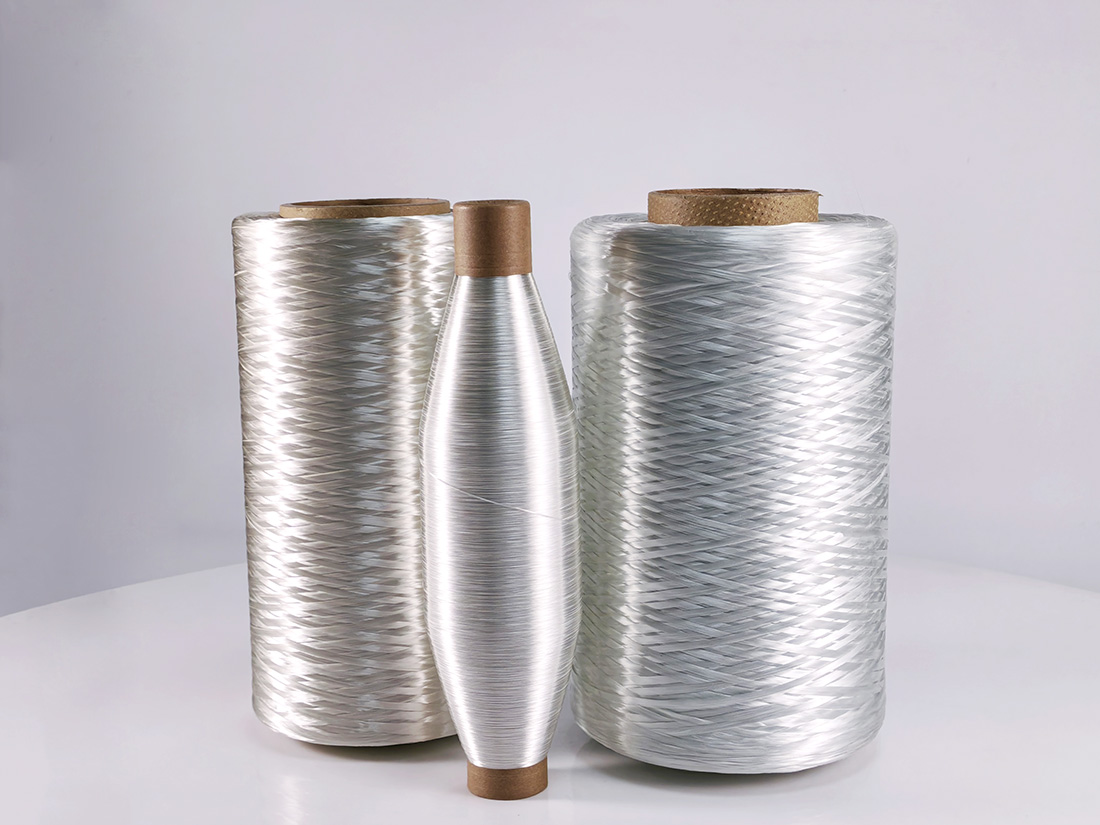
Fiberglass roving and yarn are two common forms in fiberglass product manufacturing, exhibiting distinct differences in their applications, characteristics, and production processes. This article explores the distinctions between fiberglass roving and yarn, analyzing their differences in production equipment to help readers better understand and utilize these two materials.
Differences Between Fiberglass Roving and Yarns:
1. Diameter and Fiber Density:
Roving: Features larger fiber diameter, greater gaps between fibers, and relatively lower fiber density.
Yarns: Features smaller fiber diameter, smaller gaps between fibers, and relatively higher fiber density.
2. Strength and Toughness:
Roving: Due to larger fiber diameter, roving typically exhibits higher strength but relatively lower toughness.
Yarns: Despite smaller fiber diameter, filament generally offers superior toughness, making it suitable for applications demanding high flexibility.
3. Application Fields:
Roving: Often used in manufacturing products requiring high strength but less emphasis on surface fineness, such as fiberglass products.
Fine yarn: Commonly used in manufacturing products requiring high surface flatness and fine detail requirements, such as printing fabrics and electronic product casings.
Production Equipment Differences:
Despite variations in fiber diameter and density, the production equipment for roving and filament yarn is largely similar, primarily involving the following processes:
1. Glass Fiber Drawing: Both roving and filament yarn require drawing equipment to form fiberglass into the desired diameter.
2. Fiber Twisting: Drawn fiberglass undergo twisting in twisting equipment to form yarn.
3. Yarn Coating: Yarn may require coating during production to enhance performance and applicability.
4. Yarn winding: Finally, the yarn is wound onto spools using winding equipment for convenient transportation and use.
Although the production equipment is largely identical, equipment parameters and processes may be fine-tuned during production to accommodate fibers of different diameters and densities.
Fiberglass roving and yarn exhibit distinct differences in diameter, strength, toughness, and application domains. While both utilize largely identical production equipment, adjustments and optimizations may occur based on specific requirements. Selecting appropriate fiberglass yarn is critical for manufacturing high-quality glass fiber products, necessitating careful selection and control of fiber diameter and quality throughout production.
Post time: Mar-03-2026


