


As early as the 1950s, glass fiber reinforced composites were used in non-load-bearing components of helicopter airframes, such as fairings and inspection hatches, though their application was quite limited.
The breakthrough advancement in composite materials for helicopters occurred in the 1960s with the successful development of glass fiber reinforced composite rotor blades. This demonstrated the outstanding advantages of composites—superior fatigue strength, multi-path load transfer, slow crack propagation characteristics, and the simplicity of compression molding—which were fully realized in rotor blade applications. The inherent weaknesses of fiber-reinforced composites—low interlaminar shear strength and sensitivity to environmental factors—did not adversely affect rotor blade design or application.
While metal blades typically have a service life not exceeding 2000 hours, composite blades can achieve lifespans exceeding 6000 hours, potentially indefinite, and enable condition-based maintenance. This not only enhances helicopter safety but also significantly reduces the full-life-cycle cost of blades, yielding substantial economic benefits. The straightforward, easy-to-operate compression molding and curing process for composites, combined with the ability to tailor strength, stiffness (including damping characteristics), enables more effective aerodynamic profile improvements and optimizations in rotor blade design, as well as optimization of rotor structural dynamics. Since the 1970s, research into new airfoids has yielded a series of high-performance helicopter blade profiles. These new airfoids feature a transition from symmetric to fully curved, asymmetric designs, achieving significantly increased maximum lift coefficients and critical Mach numbers, reduced drag coefficients, and minimal changes in moment coefficients. Improvements in rotor blade tip shapes—from rectangular to swept, tapered tips; parabolic swept downward-curved tips; to advanced thin swept BERP tips—have substantially enhanced aerodynamic load distribution, vortex interference, vibration, and noise characteristics, thereby increasing rotor efficiency.
Moreover, designers implemented multidisciplinary integrated optimization of rotor blade aerodynamics and structural dynamics, combining composite material optimization with rotor design optimization to achieve enhanced blade performance and vibration/noise reduction. Consequently, by the late 1970s, nearly all newly developed helicopters adopted composite blades, while retrofitting older models with metal blades to composite ones yielded remarkably effective results.
The primary considerations for adopting composite materials in helicopter airframe structures include: the complex curved surfaces of helicopter exteriors, coupled with relatively low structural loading, making them suitable for composite fabrication to enhance structural damage tolerance and ensure safe, reliable operation; the demand for weight reduction in airframe structures for both utility and attack helicopters; and requirements for crash-absorbing structures and stealth design. To address these needs, the U.S. Army Aviation Applied Technology Research Institute established the Advanced Composite Airframe Program (ACAP) in 1979. From the 1980s, when helicopters like the Sikorsky S-75, Bell D292, Boeing 360, and European MBB BK-117 with all-composite airframes began test flights, to Bell Helicopter’s successful integration of the V-280′s composite wings and fuselage in 2016, the development of all-composite airframe helicopters has made significant strides. Compared to aluminum alloy reference aircraft, composite airframes deliver substantial benefits in airframe weight, production costs, reliability, and maintainability, meeting ACAP program objectives as outlined in Table 1-3. Consequently, experts assert that replacing aluminum airframes with composite structures holds significance comparable to the 1940s transition from wooden-fabric airframes to metal structures.
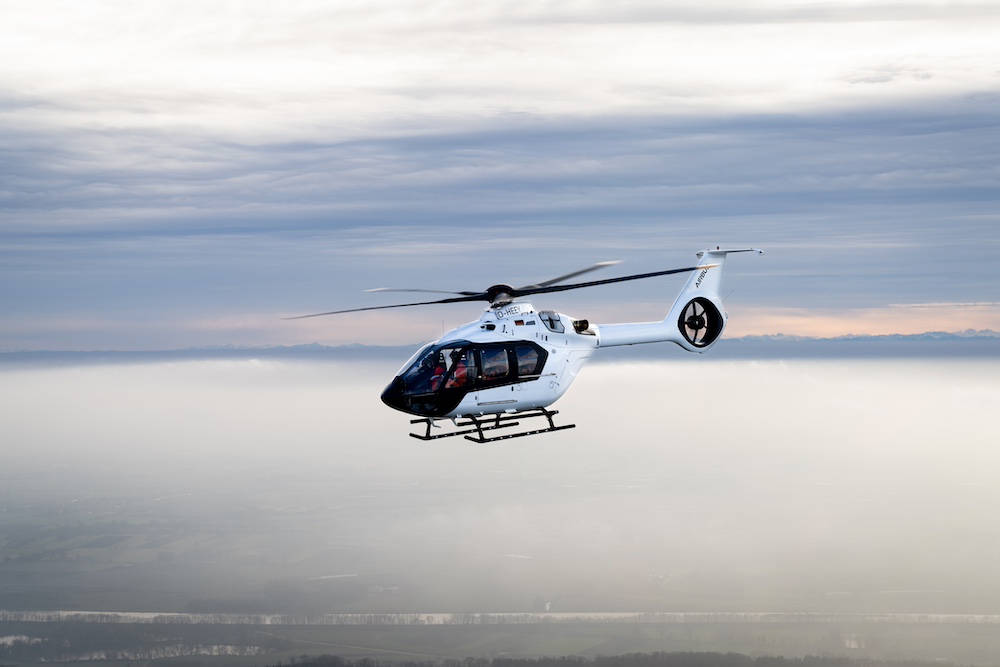
Naturally, the extent of composite material usage in airframe structures is closely tied to helicopter design specifications (performance metrics). Currently, composite materials account for 30% to 50% of the airframe structure weight in medium and heavy attack helicopters, while military/civilian transport helicopters utilize higher percentages, reaching 70% to 80%. Composite materials are primarily employed in fuselage components such as the tail boom, vertical stabilizer, and horizontal stabilizer. This serves two purposes: weight reduction and the ease of forming complex surfaces like ducted vertical stabilizers. Crash-absorbing structures also utilize composites to achieve weight savings. However, for light and small helicopters with simpler structures, lower loads, and thin walls, the use of composites may not necessarily be cost-effective.
Post time: Feb-13-2026


